Top Takeaways
24x24x1 air filter
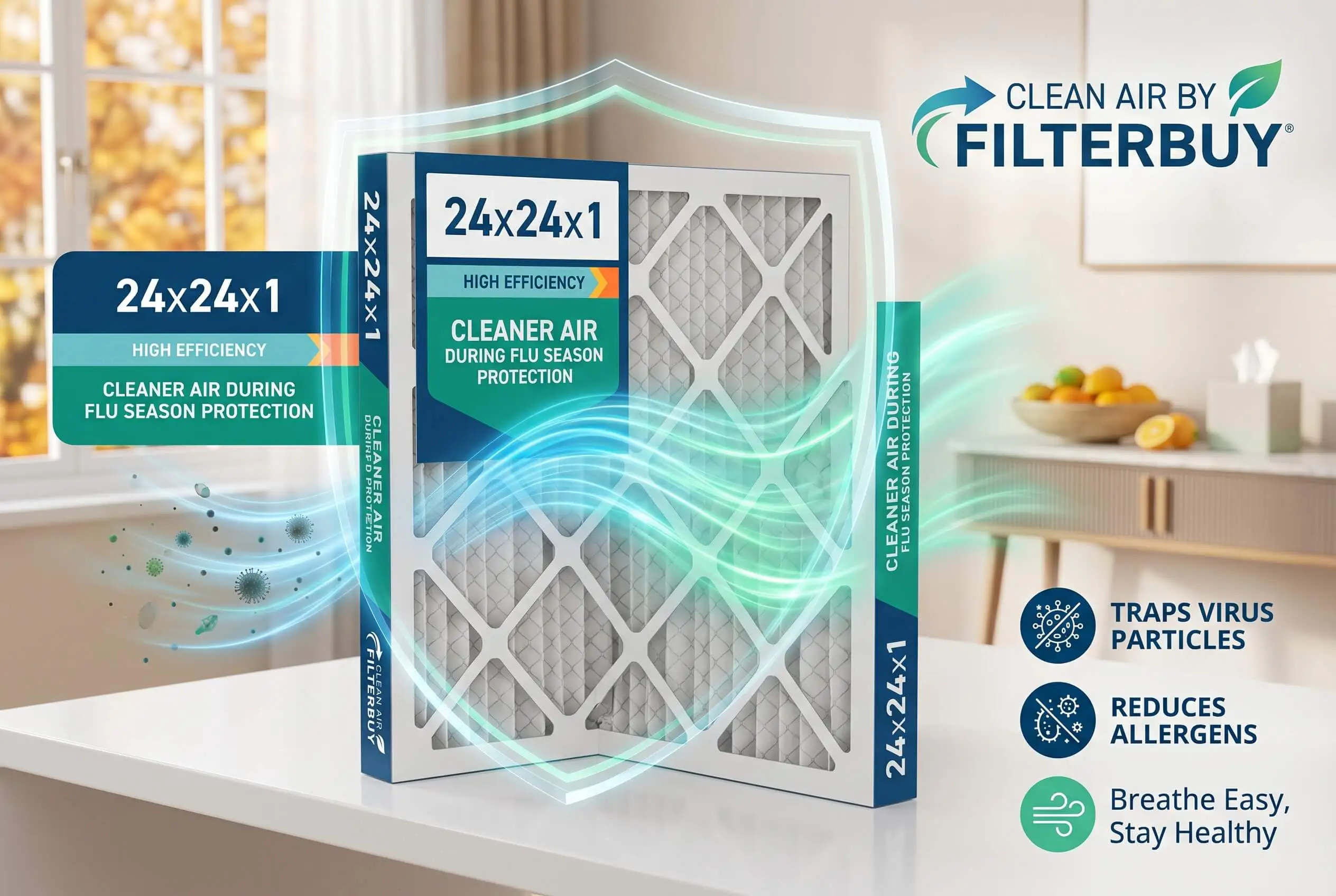
A 24x24x1 air filter is a standard residential HVAC filter for 24-inch return slots, with actual dimensions of 23.38 x 23.38 x 0.75 inches so it slides into the slot without binding. It captures airborne particles every time your system cycles air through the return.
MERV options: MERV 8 catches dust and lint, MERV 11 picks up finer allergens and mold spores, and MERV 13 captures sub-micron particles including the size range that carries respiratory viruses.
Replacement cadence: Standard 90-day cycle for a healthy household. Six-week cycle for asthma, allergies, pets, or immunocompromised members. Two- to three-week checks during weeks of active illness at home.
Size check: The "24x24x1" on the box is nominal, not literal. Confirm the dimensions stamped on your existing filter frame before ordering replacements.
Top Takeaways
Pick the highest MERV your HVAC system can run cleanly — MERV 13 if it can take it, MERV 11 if it can’t.
Shorten the replacement cycle to every two or three weeks whenever someone at home is actively sick.
Treat the filter as one layer of defense, not the whole defense. Vaccination, hand hygiene, and staying home when sick are still doing the heavier work.
Before you upgrade anything, check the size stamped on your current filter frame. Most homes get this detail wrong at least once.
Why Flu Season Changes the Math on Air Filtration
Indoor concentration is why respiratory viruses spread differently than outdoor ones. Closed windows, packed indoor schedules, HVAC systems running on recirculation instead of fresh-air exchange: by January, the air a household is breathing has been cycling through the same loop for weeks, making sealed ductwork with aluminum foil tape for HVAC systems part of keeping that loop tighter and cleaner. The CDC names ventilation and filtration as part of the core prevention strategy for respiratory viruses, alongside vaccination and hygiene, because reducing the airborne dose is one of the more controllable variables in a home.
A 24x24x1 filter captures particles each time air cycles through the return. It cannot stop close-range exposure when someone is coughing two feet from you, and we won’t pretend it can. The filter’s value is cumulative — pulling particles out of recirculated air, every cycle, for the 30 to 90 days it sits in your system. Over the weeks someone is sick at home, that running total is the number that matters.
Understanding 24x24x1 Filters and MERV Ratings
. The “24x24x1” stamped on the box is the nominal size, not the literal one. The actual filter measures 23.38 x 23.38 x 0.75 inches, sized that way so it slides into a 24-inch return slot without binding. Match the size and MERV 8 filter rating on your existing filter frame and you’re fine. Miss it by even a quarter inch on the long edges, and air bypasses the filter through the gap, sending the particles you wanted captured right past it. Worth a one-time check before you upgrade anything else.
MERV, short for Minimum Efficiency Reporting Value, is the rating system that tells you what size of particles a filter actually catches. The basic mechanics of how an air filter works come down to fiber density and pleat surface area. The higher the MERV, the tighter the weave. In residential terms, MERV 8 handles dust, lint, and large allergens. MERV 11 picks up finer particles like mold spores and pet dander. MERV 13 is the rating the CDC names as helpful for capturing respiratory virus particles, which run sub-micron in size, and the jump from 11 to 13 is the one that matters during flu season because that’s where filtration starts touching the particle range carrying viral material.
Will a Higher MERV Hurt Your HVAC System?
This is the question we hear most when we suggest moving from MERV 8 to MERV 13. The honest answer is that it depends on the system, and the way to find out is to test rather than guess.
Higher-MERV media is denser, which means more airflow resistance. A modern system with a variable-speed blower handles that without much trouble. An older single-speed system pushing through undersized return ducts can struggle, and the warning signs show up within a week of changeover — weaker airflow at the registers, the blower working harder than usual, and shorter run cycles than you’re used to. If you see those, drop back to MERV 11. It’s still a real upgrade over the basic MERV 8 panel most homes start with, and it puts less load on the equipment.
The EPA’s Guide to Air Cleaners in the Home covers this tradeoff in plain language and is worth reading once before you make the switch to top air filters. Plenty of households run MERV 13 without any issue at all. Others find MERV 11 is the right ceiling for their equipment. Either way, the household ends up better protected than it was with the contractor-grade MERV 1-to-4 panel filter most homes ship with by default.
Replacement Cadence When Someone in the House Is Sick
The standard 90-day replacement schedule assumes a healthy household with average particle loading. Flu season doesn’t fit that assumption, especially in the weeks when someone at home is actively sick.
Here’s the working rule we give households during active illness: pull the filter out and look at it every two to three weeks. Pale grey-white is clean. Medium-to-dark grey means it’s loading up and approaching change time. Anything tan or brown is past due. Households with asthma, allergies, or anyone immunocompromised should run on a 6-week cadence year-round, not only during flu season. Pet households add baseline load and benefit from that same shortened interval.
The cost math on shorter replacement cycles works in your favor more than people expect. A multipack drops the per-filter price considerably compared to single-unit ordering, and you have the next replacement on hand the moment a visual check tells you it’s time. When the filter in the slot is loaded, our 24x24x1 air filter selection ships from the factory within 24 hours.
“Every December and January, the same conversation comes up on our support calls — a household just realized three of the five filters in their house haven’t been changed in over a year, and someone’s already getting sick. Filter cadence is the cheapest layer in respiratory virus protection, and it’s the one most homes neglect first.”
Essential Resources
CDC — Ventilation and Respiratory Viruses. https://www.cdc.gov/ncird/whats-new/ventilation-respiratory-viruses.html. The CDC’s core guidance on filtration as a layered defense, including the agency’s recommendation to use MERV-13 filters when systems can run them.
CDC — Improving Air Cleanliness. https://www.cdc.gov/niosh/ventilation/prevention/air-cleanliness.html. How filtration fits into the broader NIOSH ventilation hierarchy.
EPA — Ventilation and Respiratory Viruses. https://www.epa.gov/indoor-air-quality-iaq/ventilation-and-respiratory-viruses. Practical, residentially-scoped HVAC steps homeowners can take, drawn from CDC’s wider guidance.
EPA — Guide to Air Cleaners in the Home. https://www.epa.gov/indoor-air-quality-iaq/guide-air-cleaners-home. The clearest plain-language primer we know on furnace and HVAC filter upgrades for residential systems.
EPA — Air Cleaners and Air Filters in the Home. https://www.epa.gov/indoor-air-quality-iaq/air-cleaners-and-air-filters-home. The hub page linking out to deeper EPA technical-summary PDFs.
CDC — About Estimated Flu Burden. https://www.cdc.gov/flu-burden/php/about/index.html. Annual ranges for flu illnesses, hospitalizations, and deaths in the U.S., updated each season.
ENERGY STAR — Air Cleaners. https://www.energystar.gov/products/air_cleaners. Useful for households layering portable air cleaners on top of HVAC filtration, especially in bedrooms and sick rooms.
Supporting Statistics
The CDC estimates flu has caused between 9.4 million and 51 million illnesses, 120,000 to 710,000 hospitalizations, and 6,300 to 52,000 deaths annually in the United States between 2010 and 2025. Source: CDC Flu Burden.
The 2024–25 U.S. flu season was the first ever classified as high severity across all age groups combined, with preliminary CDC estimates of at least 43 million symptomatic illnesses, 560,000 hospitalizations, and 38,000 deaths. Source: CDC Influenza Activity Report.
The CDC recommends filters rated MERV-13 or higher when feasible, noting that higher-rated filters remove more germs from indoor air than lower-rated ones. Source: CDC Ventilation and Respiratory Viruses.
Final Thoughts and Opinion
A 24x24x1 filter at MERV 13 is one of the highest-leverage protective steps a homeowner can take during flu season and help improve indoor air quality. It costs less than dinner out and works whether you remember to think about it or not. We’re not selling it as a stand-in for the rest of the playbook. Vaccination, hand hygiene, and staying home when sick all stay on the list. But the filter in your return is one of the few defenses you set up once and let run for months, and getting the choice right is worth the ten minutes it takes to check what’s in the slot.
Frequently Asked Questions
Does a higher MERV filter actually help with flu viruses?
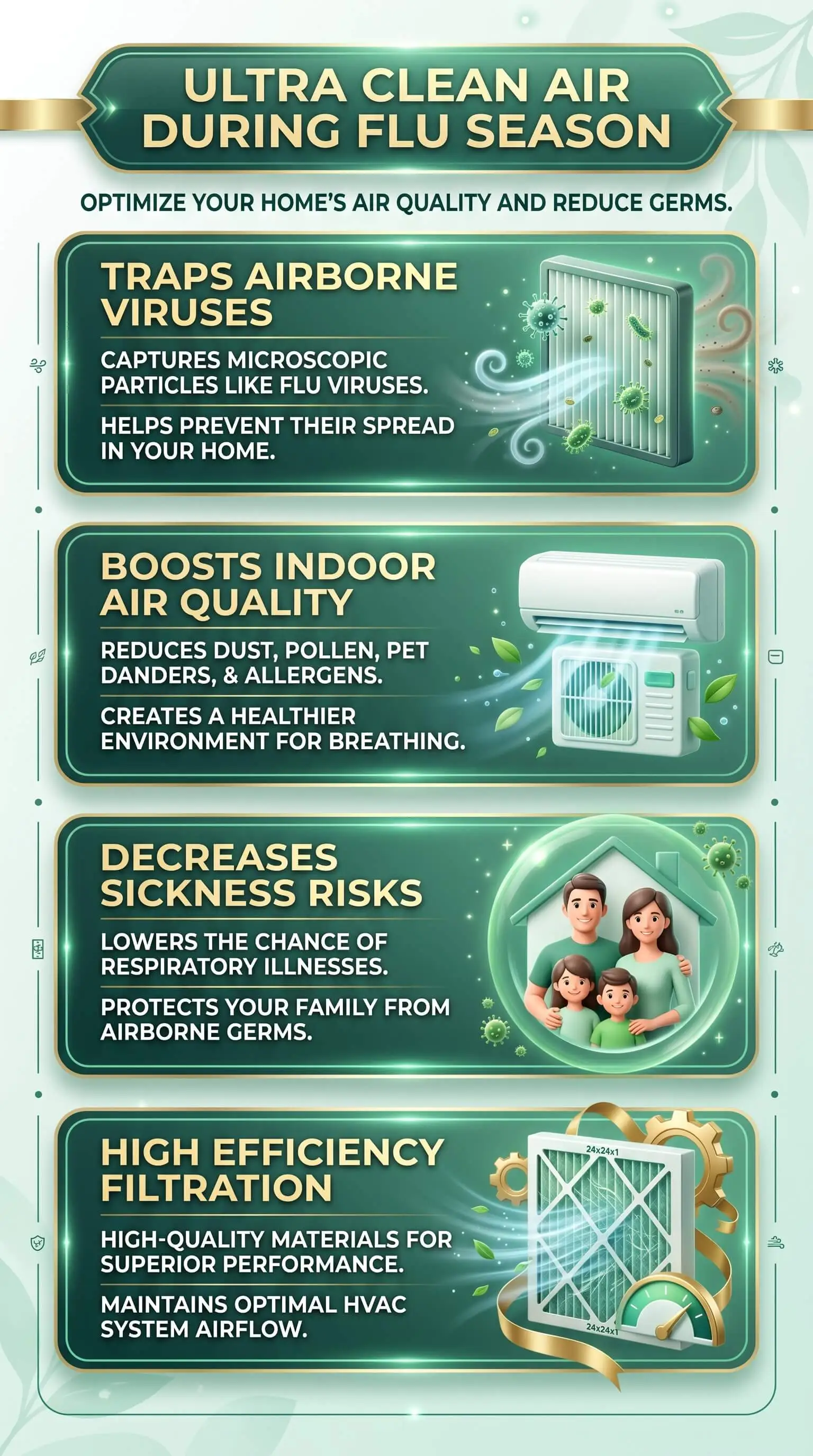
Yes, with limits worth knowing. The CDC recommends MERV-13 filters where systems can run them because tighter media catches more sub-micron particles, including the size range that carries respiratory viruses. The filter won’t stop close-range exposure when someone is coughing nearby, but over hours and days of continuous operation it reduces the viral load in recirculated air.
How often should I change my 24x24x1 air filter during flu season?
The standard 90-day cadence works for healthy households with average loading. When someone at home is actively sick, pull the filter out every two to three weeks and replace it once the color shifts from pale grey to medium or dark grey. Households with asthma, allergies, or anyone immunocompromised should run on a 6-week cycle year-round, not just during flu season.
Will a MERV 13 filter damage my HVAC system?
Not on most modern Central AC equipment with variable-speed blowers. On older single-speed Central AC systems with undersized returns, the higher airflow resistance can strain the blower. In the first week after changeover, watch for weaker airflow at the registers, the blower working harder than usual, or shorter run cycles. If you see those, step back down to MERV 11.
What’s the actual size of a 24x24x1 air filter?
The nominal size is 24 x 24 x 1 inches. The actual physical dimensions are 23.38 x 23.38 x 0.75 inches, and the undersize is intentional — it lets the filter slide into a 24-inch slot without binding. Confirm the size stamped on your existing filter frame before ordering replacements.
Is a residential air filter enough to protect my family from the flu?
No, and we won’t tell you it is. HVAC filtration is one layer in the multi-layered defense the CDC recommends, and it works alongside vaccination, hand hygiene, and staying home when sick. The filter’s job is reducing the viral load in recirculated indoor air over time, which is a real contribution to household protection without being a substitute for the rest of the layers.
Cleaner Air Starts With a Better Filter This Flu Season
When the next replacement window comes around, the right 24x24x1 filter for your system is the step that earns its keep through every recirculation cycle for the next 30 to 90 days. We make ours in the USA and ship them within 24 hours, so the upgrade reaches your slot before the next round of school colds comes home.