Dust a carpeted bedroom on Sunday, and by Tuesday the nightstand wears a fresh gray film. Your HVAC air filter can catch the dust floating in the air while your system runs. The rest stays packed in the carpet.
That film is mostly skin flakes, lint, pet dander, and dust mite debris. It cycles between the carpet and the air every time someone walks across the room or shakes out a comforter. Don’t take that cycle for granted. Your filter is one tool for breaking it, and it does its best work once you know exactly where its reach ends.
TL;DR Quick Answers
air filter
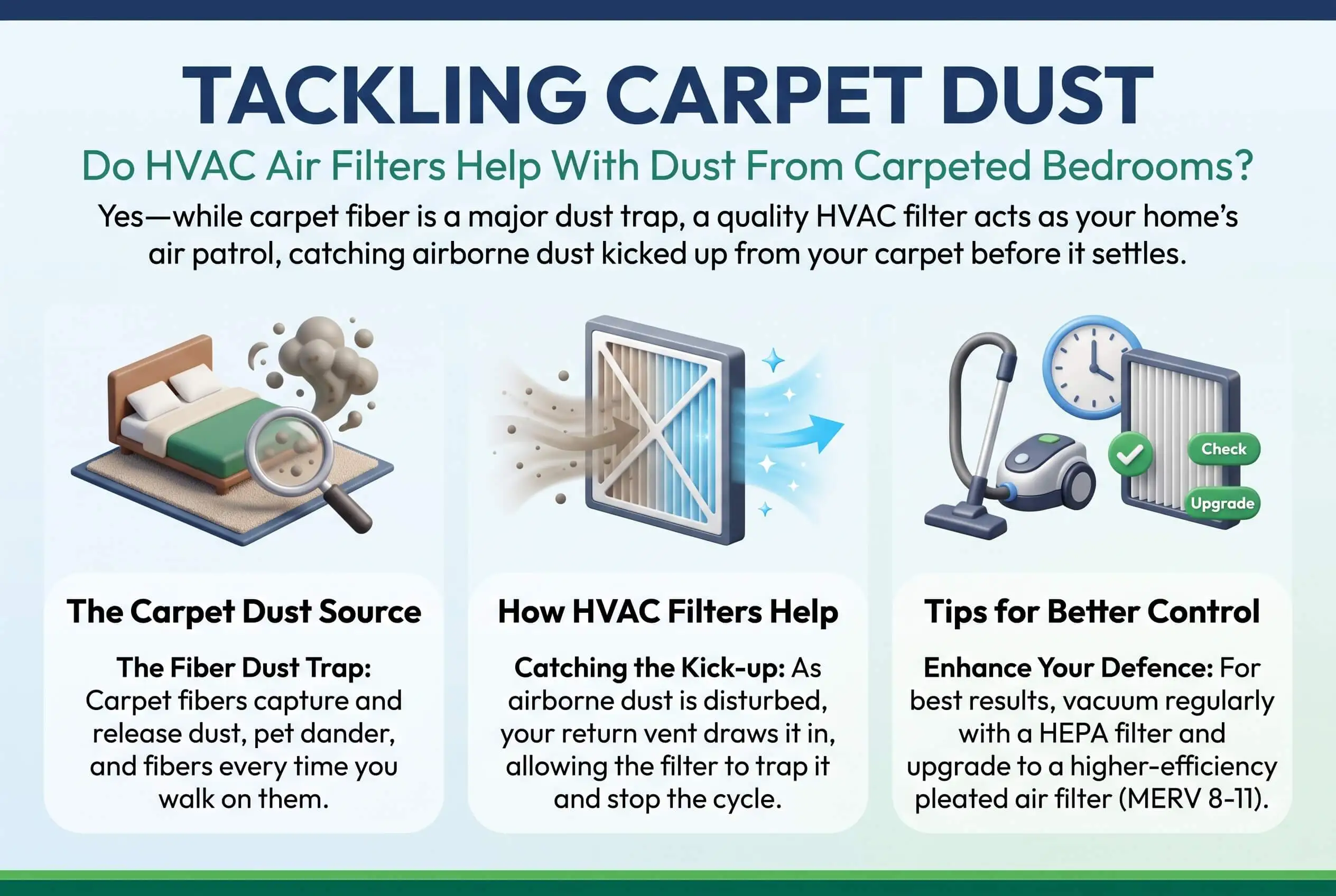
An air filter is the layer of fiber media in your HVAC system that traps dust, pollen, pet dander, and mite debris as air flows back through the return vent. It only cleans air that’s moving, so in a carpeted bedroom it catches stirred-up dust, not what’s settled in the carpet.
How it works: Air passes through pleated media, and particles stick to the fibers on the way through.
What to choose: MERV 13 or the highest rating your system can handle, in the exact size printed on your current filter’s frame.
When to change it: Every 60 to 90 days, or sooner once it looks gray and matted.
How to get more from it: Switch the thermostat fan to ON while you vacuum so the filter catches dust before it settles back into the carpet.
Top Takeaways
An HVAC air filter captures dust only while that dust is airborne and the system is running.
The carpet works as a dust reservoir, and walking and cleaning keep stirring it up.
Pick MERV 13 or the highest rating your system handles, and make sure it fits snugly.
Run the fan on ON during and after vacuuming to catch dust before it settles.
Bedding care, humidity control, and hard flooring handle what filters can’t.
Why Carpeted Bedrooms Hold So Much Dust
Think of wall-to-wall carpet as a sponge. Its fibers hold onto skin flakes, lint, pet dander, and the droppings dust mites leave behind. Bedrooms collect more of it than most rooms. You shed skin there every night, and mites feed on exactly that, so they settle into your mattress, your pillows, and the carpet under your feet.
The carpet doesn’t keep that dust locked away, though. Footsteps, kids playing on the floor, pulling back the comforter, and even your vacuum push particles back into the air, a process researchers call resuspension. Once dust goes airborne, your HVAC system and air filter for home use finally get a shot at it.
What Your HVAC Air Filter Actually Captures
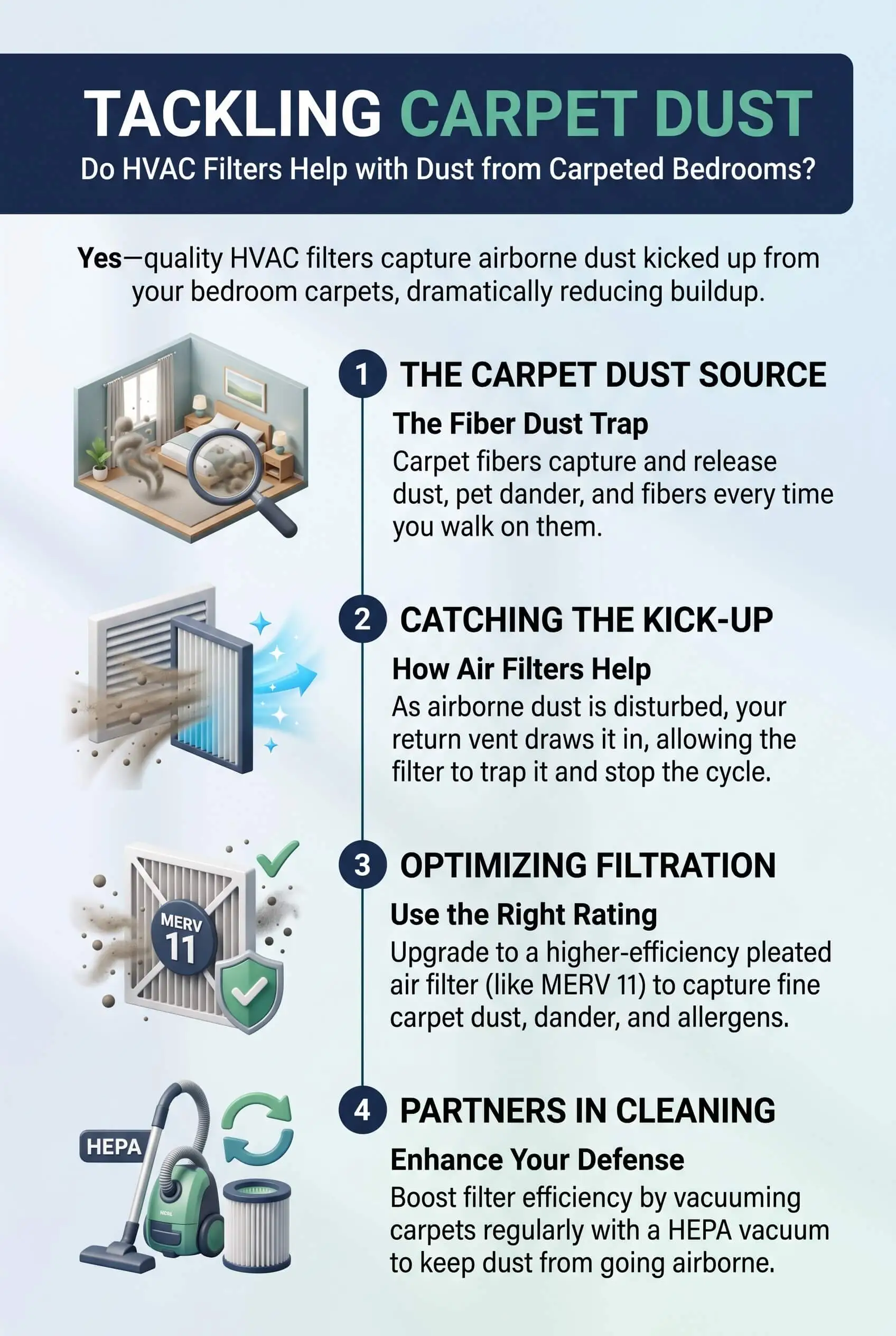
A particulate air filter traps particles as air passes through its media. When your blower runs, it pulls bedroom air back through the return vent, and the filter grabs the dust, pollen, dander, and mite debris riding along.
Size decides what makes the trip. Fine particles hang in the air long enough to reach the return. Larger mite fragments and lint drop back onto the carpet within minutes, often before your system even cycles on. Choosing the right air filter sizes helps ensure a proper fit, giving your filter a better chance to capture dust that’s airborne while the system is running.
Where Whole-House Filtration Falls Short
Short run times. Your system runs only when the thermostat calls for heating or cooling, so filtering happens in bursts rather than all day.
Closed doors. A bedroom without its own return vent traps air when the door stays shut. A gap under the door or a transfer grille gives that air a path back to the filter.
Heavy particles. Larger dust settles fast and never makes it to the return.
Mites that stay put. Dust mites cling to carpet fibers and padding. Berkeley Lab’s indoor air research hasn’t shown that air cleaning alone eases dust mite allergy symptoms, so cleaning the source does most of the work.
Poor fit. Even a slightly undersized filter lets dusty air slip around its edges.
How to Choose the Right Air Filter for a Carpeted Bedroom
Go as High on MERV as Your System Allows
The EPA recommends MERV 13 or the highest rating your system fan and filter slot can handle. For many homes, I’d go with a pleated air filter rated MERV 11 to 13. That range catches fine dust while keeping airflow strong. If you’re torn between two ratings, this MERV 8 vs MERV 11 comparison lays out the tradeoffs.
Make Sure It Fits Snugly
Match the size printed on your current filter’s frame. It should slide in without bending, with no gaps showing around the edges.
Change It on Schedule
Most manufacturers recommend a fresh filter every 60 to 90 days. In a carpeted home, especially one with pets, check yours monthly and swap it sooner once it looks gray and matted. Keeping up with regular filter replacement protects your air and your equipment.
A Simple Routine to Cut Bedroom Dust
Vacuum bedroom carpet twice a week with a HEPA-filter vacuum.
Flip your thermostat fan from AUTO to ON while you vacuum and for about two hours afterward, so the filter catches dust before it settles.
Wash sheets and pillowcases weekly in hot water.
Zip your mattress and pillows into allergen-barrier encasements, which keep mites and their waste from working back into the air you breathe at night.
Keep indoor humidity below 50%. Mites struggle to survive in drier air.
Leave the bedroom door open while you clean so air can reach the return.
Pro Tip: Vacuum right before you change your filter, not after. The fresh filter then starts its cycle on the heaviest dust load of the week instead of leaving that job to an old, clogged one.
When to Add an Air Purifier or Rethink the Carpet
If someone in your home has a dust mite allergy, a portable HEPA air purifier sized for the bedroom keeps filtering right where you sleep, even while the HVAC system sits idle. AAFA and ACAAI both recommend hard flooring over wall-to-wall carpet, especially in bedrooms, and I’d call it the strongest single fix. You don’t have to tear out every carpet in the house. Start with the bedroom, where the payoff is biggest.
“Based on my experience pulling filters from homes with carpeted bedrooms, the filter face tells the story: a gray, felted layer of lint and skin flakes at six weeks instead of ninety days. What it can’t show you is the dust still packed in the carpet pad, so I tell homeowners to run the fan on ON during vacuuming, not after, because that’s when the most dust is airborne and moving toward the return.”
Essential Resources
Pleated HVAC Air Filters: Standard and custom sizes, with MERV options for homes with carpet, pets, or allergies.
Dust Mite Allergy: Allergy-focused steps for bedrooms and carpet.
Dust Allergies: The American College of Allergy, Asthma and Immunology on flooring, filters, humidity, and cleaning habits.
Dust Mites: The National Center for Healthy Housing explains where mites live, why carpet and its padding hold onto them, and how humidity keeps them thriving.
Dust Mites and Cockroaches: NIEHS on two common indoor allergens.
Dust and Indoor Air Quality Briefing: The American Lung Association on what household dust is actually made of.
Air Cleaning: Berkeley Lab’s research summary on what air cleaning can and can’t do for allergies.
Supporting Statistics
Filtering happens in bursts. Home HVAC systems usually run less than 25% of the time during heating and cooling seasons, and your filter cleans air only while the system runs. (EPA)
Carpet dust travels. In RTI International’s testing, particles that were kicked up from carpet still measured roughly 20% to 40% of source levels about 1.2 meters away with the HVAC running. (RTI International)
A clean filter saves energy. Swapping a dirty, clogged filter for a clean one can cut an air conditioner’s energy use by 5% to 15%. (U.S. Department of Energy)
Using high quality filters and replacing them regularly can help capture airborne dust stirred up from carpets, improve bedroom air quality while your HVAC system runs, and reduce air conditioner energy use by 5% to 15% when replacing a dirty, clogged filter.
Final Thoughts
I think of the HVAC air filter as a supporting player in a carpeted bedroom, not the lead. It does honest work on whatever dust gets airborne. It can’t reach what’s buried in the pile, though, and it can’t clean anything while the system sits idle.
The homes where I’ve seen the biggest change paired a snug, higher-MERV filter with smart fan timing and steady source control. You’ll spot the difference on the nightstand first. Then you’ll feel it in the room when you wake up.
Frequently Asked Questions
Will a higher MERV air filter stop dust from my bedroom carpet?
It’ll catch more fine dust once that dust is airborne, but no filter can pull dust out of the carpet itself. Pair a higher-MERV filter with regular HEPA vacuuming for the best results.
Should I run my HVAC fan on ON or AUTO to reduce dust?
Set it to ON while you clean and for a while afterward, so air keeps moving through the filter while dust is still floating. AUTO works fine the rest of the time if you’re watching energy use.
How often should I change my air filter if my bedroom is carpeted?
Check it every month and replace it every 60 to 90 days, or sooner once it looks gray and matted. Homes with pets often need more frequent changes.
Does vacuuming carpet make bedroom dust worse?
For a little while, yes. Vacuuming kicks dust into the air before it settles again, and a HEPA vacuum plus a running HVAC fan helps you catch it.
Is a portable air purifier better than an HVAC air filter for a bedroom?
Use both. A portable HEPA unit filters the bedroom continuously, and your HVAC filter cleans air across the whole house whenever the system runs.
Breathe Easier in Your Carpeted Bedroom
Your air filter can catch the dust your carpet lets go of, as long as it fits snugly and gets swapped on time. Check your filter size, choose high efficiency air filters that fit your system, set a replacement reminder, and pair it with the bedroom routine above for cleaner air where you sleep.